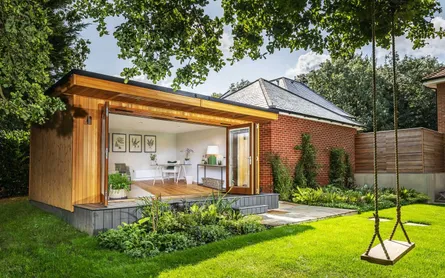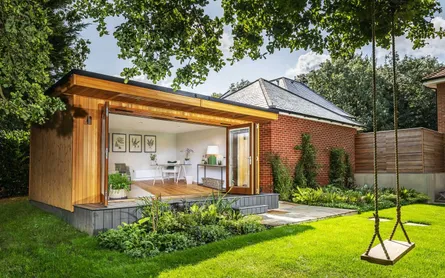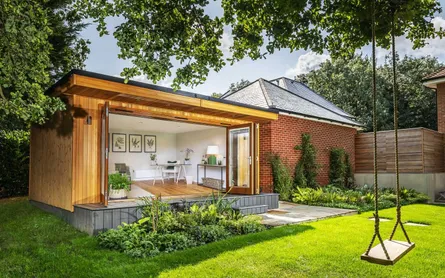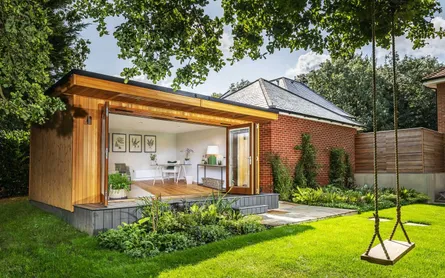
Planning Permission for Garden Rooms: Your Complete 2025 Guide
Quick Answer: Most garden rooms don't need planning permission under permitted development rights—provided they meet specific criteria including height restrictions, boundary distances, and coverage limits. However, listed buildings, conservation areas, and properties in National Parks face stricter requirements. This comprehensive guide draws on our experience delivering over 6,000 compliant installations across the UK.
- 1. Understanding Planning Permission for Garden Rooms in the UK
- 2. Do You Need Planning Permission? Quick Assessment
- 3. Understanding Permitted Development Rights in Detail
- 4. When Planning Permission IS Required
- 5. The Planning Application Process: Step-by-Step
- 6. Building Regulations: What's the Difference?
- 7. Regional Variations: England, Scotland, Wales & Northern Ireland
- 8. Common Planning Mistakes That Cost Thousands
- 9. How Crown Pavilions Ensures Planning Compliance
- 10. Frequently Asked Questions
Understanding Planning Permission for Garden Rooms in the UK
If you're considering adding a garden room to your property, one of your first questions is likely: "Do I need planning permission?" It's a crucial question that can significantly impact your project timeline, budget, and design options.
In our 15 years of designing and installing luxury garden rooms across the United Kingdom, we've navigated thousands of planning scenarios—from straightforward permitted development projects in suburban homes to complex listed building applications in conservation areas. This guide distills our extensive real-world experience into practical advice you can use.
The good news? The majority of garden room projects proceed under permitted development rights, meaning no formal planning application is required. However, several important exceptions and considerations exist, which we'll explore in detail throughout this guide.
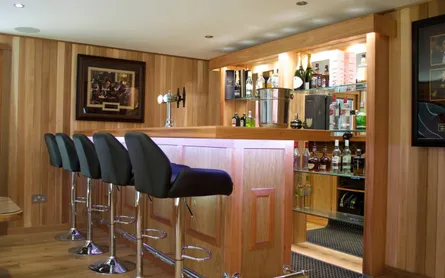
Whether you're planning a garden office, a luxury garden bar, or a multi-functional living space, understanding the planning landscape will help you avoid costly mistakes and delays.
Do You Need Planning Permission? Quick Assessment
Let's start with a straightforward assessment. Most garden rooms DON'T require planning permission if they meet these key criteria:
Permitted Development Requirements:
- Single-storey structure only
- Maximum height: 4 metres (dual pitched roof) or 3 metres (any other roof)
- Eaves height: Maximum 2.5 metres
- Distance from boundary: At least 2 metres if over 2.5 metres high
- Not forward of the principal elevation (front of house)
- Covers no more than 50% of garden area (including other outbuildings)
- Not intended as a separate dwelling
However, planning permission IS typically required if:
- Your property is listed (Grade I, II*, or II)
- You're in a designated conservation area
- Your property is in a National Park or Area of Outstanding Natural Beauty (AONB)
- An Article 4 Direction applies to your property
- Your garden room exceeds permitted development size limits
- The structure will be used as independent living accommodation
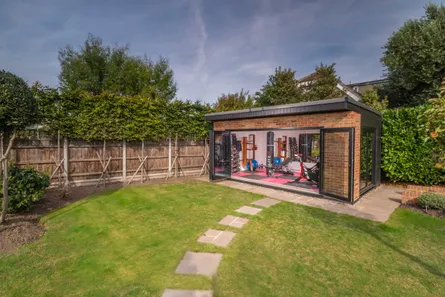
In 2024, we designed a 6m × 4m garden office for a client in Guildford. Initial plans positioned the building 1.8 metres from the boundary—which would have required planning permission. By adjusting the layout to 2.1 metres from the boundary while maintaining the same usable internal space, we kept the project within permitted development rights. This saved our client £2,500 in planning fees and eliminated an 8-week waiting period.
Understanding Permitted Development Rights in Detail
Permitted development rights are a national grant of planning permission which allows certain building works and changes to be carried out without having to make a formal planning application. For garden rooms, these rights are defined under Part 1, Class E of the General Permitted Development Order (GPDO).
Size and Height Restrictions
The height restrictions for garden rooms under permitted development are carefully defined:
Maximum Overall Height:
- Dual pitched roof: 4 metres maximum
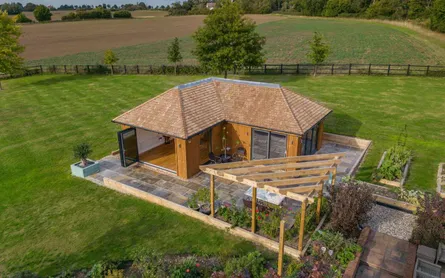
- Any other roof type: 3 metres maximum (including flat, mono-pitched, or hipped roofs)
Eaves Height:
- Maximum 2.5 metres where the garden room is within 2 metres of a boundary
These restrictions exist to protect your neighbours' reasonable enjoyment of their property—preventing overshadowing and maintaining privacy.
A standard garden room with a flat roof located 2.5 metres from your boundary can be up to 3 metres tall. However, if you opt for a traditional dual pitched roof design, you gain an extra metre of height allowance, providing more internal space and a more attractive exterior profile.
Boundary Distance Regulations
The relationship between your garden room's height and its proximity to boundaries is crucial:
The 2.5-Metre Rule:
If any part of your garden room is more than 2.5 metres high, it must be positioned at least 2 metres from any boundary. This is one of the most commonly misunderstood aspects of permitted development.
Key Points:
- You can build right up to a boundary if your structure stays under 2.5 metres high
- The 2-metre distance is measured from the boundary to the nearest part of the building
- This applies to all boundaries (rear, side, and those separating your property from neighbours)
- Height is measured from the highest ground level adjacent to the structure
In practice, most of our luxury garden room designs incorporate features like covered verandas or pergola extensions. When these elements exceed 2.5 metres in height, careful positioning becomes essential.
Garden Coverage Limits
Under permitted development, the total area covered by buildings and structures more than 2 metres from any boundary must not exceed 50% of your total garden area (excluding the original house footprint).
This calculation includes:
- Your proposed garden room
- Any existing outbuildings, sheds, or garages
- Conservatories and extensions
- Other permanent garden structures
Important: This doesn't mean you're limited to using only half your garden. The 50% rule applies to built structures, not patios, driveways, or landscaping.
A client in Winchester wanted to add a 30m² garden gym to a property that already had a 20m² garage and 10m² shed. With a garden area of 200m², they were already using 15% of their garden space for outbuildings. The new 30m² garden room would bring the total to 60m² (30%), comfortably within the 50% limit (100m²). The project proceeded under permitted development without issues.
When Planning Permission IS Required
While permitted development covers many scenarios, several situations mandate a formal planning application. Understanding these exceptions is crucial for avoiding potentially costly mistakes.
Listed Buildings and Listed Building Consent
If your property is listed (Grade I, II*, or II listed), virtually any external alteration or addition—no matter how small—requires Listed Building Consent, and in most cases, planning permission as well.
The Listed Building Process:
- Submit both a planning application and listed building consent application
- Decision period: 8-13 weeks typically
- Application fee: £206 for planning + £206 for listed building consent
- Often requires heritage statement demonstrating impact assessment
- May need consultation with conservation officer and heritage bodies
We've successfully delivered garden rooms on over 200 listed properties, from Grade II cottages in the Cotswolds to Georgian townhouses in Bath. Our design team understands the sensitivity required—often proposing traditional materials, appropriate architectural detailing, and careful siting to gain approval.
One memorable project involved a Grade II* listed manor house in Yorkshire. We worked closely with the conservation officer to design a garden room using reclaimed timber cladding and hand-made clay roof tiles that complemented the main house. The careful attention to heritage details secured approval despite the property's high listing grade.
Conservation Areas
Conservation areas are designated by local authorities to protect areas of special architectural or historic interest. If you're in a conservation area, permitted development rights are more restricted:
Additional Restrictions:
- Garden rooms cannot be larger than the largest original outbuilding
- Materials and design may need to reflect local character
- Some conservation areas have additional Article 4 Directions (see below)
- Prior approval may be required even for "permitted" development
Visit your local planning authority's website or planning portal. Most councils maintain an interactive map showing conservation area boundaries. You can also contact the planning department directly—many offer a free initial inquiry service.
Even within conservation areas, many garden room projects proceed successfully. The key is demonstrating that your proposal preserves or enhances the character of the conservation area. High-quality materials, traditional design elements, and sensitive siting significantly improve your chances of approval.
Article 4 Directions
An Article 4 Direction is a tool local planning authorities use to remove permitted development rights in specific areas. They're commonly applied in:
- City centres and urban conservation areas
- Areas of exceptional architectural quality
- Locations where cumulative development might harm character
- Heritage-sensitive neighbourhoods
Common Locations:
- Central London boroughs (Kensington & Chelsea, Westminster, Camden)
- Historic cities (Bath, Oxford, Cambridge, York, Edinburgh)
- Affluent residential areas
- World Heritage Sites
What This Means: If an Article 4 Direction covers your property, you'll need planning permission for development that would normally be permitted. There's no standard Article 4 Direction—each is specific to its location, so checking your exact property is essential.
We recently worked with a client in Bath's World Heritage Site where an Article 4 Direction applied. What would typically be a straightforward permitted development project required a full planning application, heritage statement, and detailed design drawings. The application succeeded, but added 10 weeks and approximately £3,000 to the project costs.
National Parks and AONBs
Properties in National Parks or Areas of Outstanding Natural Beauty face the most stringent restrictions:
Additional Requirements:
- Maximum size for permitted development: 10 cubic metres for any outbuilding
- Design and materials must be appropriate to the landscape
- Volume limits are significantly lower than standard permitted development
- No permitted development for extensions on designated land
UK National Parks Include:
- Lake District, Peak District, Yorkshire Dales (England)
- Snowdonia, Brecon Beacons, Pembrokeshire Coast (Wales)
- Cairngorms, Loch Lomond & The Trossachs (Scotland)
If you're in one of these designated areas, a planning application is almost certainly required for any substantial garden room. However, applications can succeed with sensitive design that reflects local building traditions and minimises landscape impact.
The Planning Application Process: Step-by-Step
When planning permission is required, understanding the process helps manage expectations and improves success rates.
Many local authorities offer a pre-application advice service where you can discuss your proposal informally before submitting a formal application.
Benefits:
- Early identification of potential issues
- Guidance on local planning policies
- Understanding planning officer expectations
- Reduced risk of refusal
Cost: Typically £80-£300 depending on project complexity and local authority
Timeline: 2-4 weeks for written response
Absolutely, for complex projects or sensitive locations. We recommend pre-application advice for all listed buildings, conservation areas, or properties with previous planning history.
A complete planning application requires several key documents:
Essential Documents:
- Site location plan (1:1250 scale showing your property outlined in red)
- Site/block plan (1:500 or 1:200 scale showing existing and proposed buildings)
- Existing and proposed elevations (all four sides of the garden room)
- Existing and proposed floor plans
- Design and access statement (explaining your design approach)
- Planning statement (justifying the proposal against planning policies)
Additional Documents (depending on circumstances):
- Heritage statement (listed buildings)
- Tree survey (if near protected trees)
- Ecological survey (if potential protected species)
- Photographs of existing site
Professional Drawings: While not legally required to be professionally produced, planning officers strongly prefer architect or designer-prepared drawings. DIY sketches significantly increase refusal rates.
Where to Apply:
- Planning Portal online system (www.planningportal.co.uk)
- Directly through your local authority's planning portal
Fees (2025):
- Householder application: £206
- Listed building consent: £206 (separate from planning permission)
- Certificate of Lawfulness: £206
Validation: Your local authority has 5-10 working days to check your application is complete. If documents are missing, they'll request additional information before formally validating the application.
Once validated, your application enters a 21-day consultation period:
What Happens:
- Neighbours are notified (usually anyone within 20 metres)
- Site notice may be posted
- Application appears on public planning register
- Planning officer may visit the site
- Consultees (e.g., conservation officer) provide comments
Neighbour Objections: While neighbour comments are considered, planning decisions must be made on planning grounds only—not personal circumstances. Valid planning concerns include overshadowing, overlooking (loss of privacy), design incompatibility, or overdevelopment.
Informally discussing your plans with neighbours before submitting an application can prevent objections. Many concerns can be addressed through minor design adjustments like window positioning, boundary screening, or building height modifications.
Standard Timeline:
- Householder applications: 8 weeks
- Listed building consent: 8 weeks
- Major applications: 13 weeks
Possible Outcomes:
- Approval (often with conditions)
- Refusal (with reasons)
- Withdrawal (if significant issues arise)
Conditions: Most approvals include conditions such as matching materials, landscaping requirements, or construction timing restrictions. These are legally binding and must be complied with.
If your application is refused, you have several options:
Appeal:
- Free to appeal within 6 months
- Decision by Planning Inspectorate (independent of local authority)
- Timeline: 8-12 weeks for written representations
- Success rate: approximately 30% for householder appeals
Reapplication:
- Usually the better option
- Address the reasons for refusal
- Submit revised plans
- No limit on reapplications
Cost Comparison:
| Planning application fee | £206 |
| Architect drawings | £1,200-£2,000 |
| Planning consultant (optional) | £800-£1,500 |
| Total | £2,206-£3,706 |
| Timeline | 10-14 weeks |
Building Regulations: What's the Difference?
A common misconception is that planning permission and building regulations are the same thing. They're not—and you may need one, both, or neither depending on your project.
Planning Permission asks: Should this building be here?
- Considers impact on area
- Assesses design and appearance
- Evaluates effect on neighbours
- Determined by local planning authority
Building Regulations asks: Is this building safe and compliant?
- Ensures structural safety
- Checks fire safety measures
- Verifies insulation standards
- Confirms electrical safety
- Enforced by Building Control
When Building Regulations Apply
Building regulations typically apply to garden rooms that:
- Have a floor area exceeding 15m²
- Are within 1 metre of a boundary (unless substantially fire-resistant)
- Contain sleeping accommodation
- Include bathroom facilities
- Require electrical installation
The Process:
- Submit Building Notice or Full Plans application to Building Control
- Fee: £400-£800 (varies by size and local authority)
- Inspections at foundation, structure, and completion stages
- Completion certificate issued upon successful final inspection
Part P Electrical Certification: All electrical work must be certified by a qualified electrician. This is a legal requirement and essential for property insurance and future sale.

Crown’s Approach
Every Crown Pavilions installation includes full building regulations compliance as standard. Our installations come with all necessary certificates including electrical certification, structural engineer approvals where required, and building control sign-off. Our clients receive complete documentation for insurance and future property sales—providing complete peace of mind.
Regional Variations: England, Scotland, Wales & Northern Ireland
While the core principles remain similar, planning regulations vary across the UK's constituent countries:
Scotland
Scotland operates under separate planning legislation with some key differences:
- Planning authority: Local planning authorities (councils)
- Permitted development: Similar size limits to England but different specific rules
- Listed buildings: Historic Environment Scotland provides oversight for A-listed buildings
- Conservation areas: Similar principles but local variations common
- Building standards: Managed through Building Standards rather than Building Regulations
Key Difference: In Scotland, Article 4 Directions can be more commonly applied, and conservation area controls are often stricter.
Wales
Wales has its own planning policy framework:
- Planning Policy Wales provides the national planning framework
- Cadw (Welsh heritage body) advises on listed buildings and conservation areas
- Language considerations: In Welsh-speaking areas, signage and documentation may need Welsh language elements
- Prior approval: More commonly required than in England for certain developments
Northern Ireland
Northern Ireland has a distinctly different planning system:
- Department for Infrastructure handles planning applications
- Historic Environment Division manages listed buildings
- 40m² exemption: Buildings under 40m² may be exempt from building control
- Generally stricter: Permitted development rights are more limited than England
Common Planning Mistakes That Cost Thousands
In 15 years, we've seen numerous homeowners face problems that could have been easily avoided. Here are the most costly mistakes:
Mistake #1: Assuming Permitted Development Always Applies
The Problem: Approximately 30% of UK properties have some form of planning restriction—but many homeowners don't discover this until after starting construction.
The Reality: Listed buildings, conservation areas, Article 4 Directions, and previous extensions all affect permitted development rights.
The Cost: Building without permission can result in enforcement notices requiring removal or retrospective planning applications. One client in Hampshire faced £65,000 in losses when required to demolish a garden room built without permission in a conservation area.
The Solution: Always verify your planning status before starting. We offer free planning assessments to confirm your property's planning position.
Mistake #2: Not Checking Article 4 Directions
The Problem: Article 4 Directions aren't always obvious and can apply to individual properties or entire streets.
The Reality: They're particularly common in affluent urban areas, historic city centres, and architecturally significant neighbourhoods.
The Cost: £15,000-£30,000 in retrospective planning applications, potential enforcement action, and project delays of 4-6 months.
The Solution: Check your local authority's planning portal or request confirmation from the planning department. This takes 10 minutes but can save months of problems.
Mistake #3: Ignoring Building Regulations
The Problem: Many assume that if planning permission isn't required, building regulations don't apply either.
The Reality: Building regulations are separate and apply to almost all garden rooms over 15m². Electrical work MUST be certified regardless of size.
The Cost: Non-compliance can make your property uninsurable and unsellable. Retrospective building control costs £5,000-£20,000 plus potential remedial works.
The Solution: Engage with Building Control before starting construction. Regularisation is always more expensive than doing it right initially.
Mistake #4: DIY Planning Applications
The Problem: Homeowners submit applications without professional drawings or adequate supporting documentation.
The Reality: DIY applications have approximately 50% refusal rates compared to 10-15% for professionally prepared applications.
The Cost: Repeated application fees, project delays (16+ weeks for resubmission), and potentially compromised designs to gain approval.
The Solution: Professional planning services cost £800-£2,000 but dramatically improve success rates and speed. The investment almost always pays for itself.
How Crown Pavilions Ensures Planning Compliance
At Crown Pavilions, planning compliance isn't an afterthought—it's integral to our design process. Here's how we support our clients:
1. Free Planning Assessment
Every project begins with a comprehensive planning assessment:
- Site visit and property survey
- Local authority planning checks
- Article 4 Direction verification
- Listed building and conservation area confirmation
- Clear recommendation: permitted development vs. planning application
Cost: Free with no obligation
Timeline: Usually confirmed within 48 hours
2. Professional Design Service
When planning permission is required, our RIBA-accredited design team provides:
- CAD drawings to planning specification
- 3D visualisations showing your garden room in context
- Design and access statements explaining the design approach
- Planning statements addressing local planning policies
- Heritage statements for listed buildings (where needed)
3. Planning Application Management
We handle the entire process on your behalf:
- Complete application preparation and submission
- Liaison with planning officers
- Responding to queries or requests for additional information
- Attendance at site visits
- Managing the consultation process
- 2,000+ planning applications submitted
- 96% first-time approval rate
- Coverage of every UK region
- Specialist experience with listed buildings and conservation areas
4. Building Regulations Compliance
Every Crown Pavilions installation includes:
- Building Control liaison and submissions
- Structural engineer calculations (where required)
- Part P electrical certification from qualified electricians
- Inspection coordination at all required stages
- Complete documentation package including all certificates
Frequently Asked Questions
How close to the boundary can I build a garden room?You can build right up to a boundary under permitted development if your garden room is 2.5 metres or less in height. If over 2.5 metres high, it must be at least 2 metres from any boundary.
What's the maximum size for a garden room without planning permission?There's no fixed floor area limit under permitted development. Instead, limits focus on height (4m dual pitched, 3m other roofs), boundary distances (2m if over 2.5m high), and total garden coverage (50% maximum). In practice, most garden rooms between 15-60m² proceed under permitted development.
Do I need planning permission for a garden office?Garden offices follow the same planning rules as garden rooms. Most don't require planning permission under permitted development, provided they meet size, height, and boundary restrictions. However, if you're using it as a business requiring client visits, separate commercial planning considerations may apply.
Can I build a garden room attached to my house without planning?Structures attached to your house are classified as extensions, not outbuildings, which have different permitted development rules. Extensions have specific rear projection limits and different restrictions. Most semi-detached and terraced houses face more limitations than detached properties. Garden rooms vs extensions explores this in detail.
How much does planning permission cost for a garden room?The planning application fee is £206 (2025). Additional costs include professional drawings (£1,200-£2,000), planning consultant services if used (£800-£1,500), and any pre-application advice (£80-£300). Total costs typically range from £1,500-£4,000.
How long does garden room planning permission take?The statutory decision period is 8 weeks for householder applications. Including preparation time (2-4 weeks) and post-approval details, expect 12-16 weeks from initial planning to starting construction. Pre-application discussions can add 2-4 weeks but often save time overall by avoiding refusals.
Do you have to pay council tax on a garden room?No additional council tax applies if your garden room is used as part of your main dwelling (office, gym, studio, etc.). However, if used as separate living accommodation with its own facilities (kitchen, bathroom) that could be rented out, it may be assessed as a separate dwelling for council tax purposes.
What happens if I build without planning permission when required?The local authority can issue an enforcement notice requiring you to remove the structure, apply for retrospective planning permission, or modify it to comply. The 4-year rule means if your garden room hasn't been challenged within 4 years of completion, it becomes lawful—but this is risky and not recommended.
Do I need planning permission for a garden room with a bathroom?The bathroom itself doesn't trigger planning permission requirements. The same permitted development rules apply regardless of internal facilities. However, building regulations definitely apply to plumbing and drainage installations.
Can you convert a garden room into a permanent residence?Converting a garden room to independent living accommodation (an annexe) requires planning permission for "change of use." This is separate from the original construction permission. Most garden rooms are permitted/approved specifically on the basis they remain ancillary to the main house.
Ready to Plan Your Dream Garden Room?
Understanding planning permission doesn't need to be overwhelming. The key takeaways are:
- Most garden rooms DON'T need planning permission under permitted development
- Important exceptions exist: Listed buildings, conservation areas, Article 4 Directions
- Building regulations are separate from planning permission
- Professional guidance increases success rates dramatically
- Crown Pavilions handles the process for complete peace of mind
Your Next Steps
1. Check Your Planning Status
Use our quick assessment tool above or contact our team for a free planning review of your specific property.
2. Explore Design Options
Browse our luxury garden room collection to visualize your perfect space.
3. Get Expert Guidance
Book a free, no-obligation consultation with our planning specialists. We'll assess your property, explain your options, and provide clear recommendations.
4. Download Free Resources
- Planning Permission Checklist (PDF)
- Garden Room Cost Guide
- Design Inspiration Gallery
Start Your Garden Room Journey Today
Transform your outdoor space with Crown Pavilions. From initial planning to final installation, our expert team ensures a seamless, compliant, and stress-free experience.